

- Details
The Archaeological Museum of Lamta:
It is the only museum in the Monastir region dedicated to the Roman and Byzantine ruins of the Punic and the Classical (the Roman and Byzantine) and is characterized by its beautiful location near the seashore.
The museum fence surrounds part of an imperial bath founded in the second century and neglected at the end of the fourth century. The excavated parts of the museum reveal aspects of the hot section, the cold room and a hall. The floor of the exposed part of this bathroom covers a beautiful mosaic painting that includes images of wild animals (lion, tiger, gazelle), perhaps part of a hunting scene
The museum is characterized by its emphasis through the presentation of artifacts, on the educational and educational side, in order to reach the goal on the largest number of cards and graphs that make the visitor indispensable for any further clarification.
The bony hall of the museum embraces mainly the pieces discovered by the excavations in the area of tombs spread on the hills adjacent to the city. The discoveries related to the Punic period are confined to the tombs. Perhaps the most prominent pieces in this hall are the wooden coffin, which dates back to the third century BC And the rich and varied collection of hand-made ceramic pieces made of glass.
The classical hall is characterized by the richness, diversity and aesthetics of the pieces presented and derived from "Leptis" and its side, which concern the various subjects that concern the daily life from the Roman era to the Byzantine era. The most striking pieces in this hall are interesting to the terrestrial mosaic paintings (Such as the panel of Venus, which is about to be washed). These paintings show the extent to which the houses of the site were glorified.
In addition to these paintings, this hall includes a unique masterpiece, a Christian ark of marble carrying its subjects from pagan and Christian art in one.
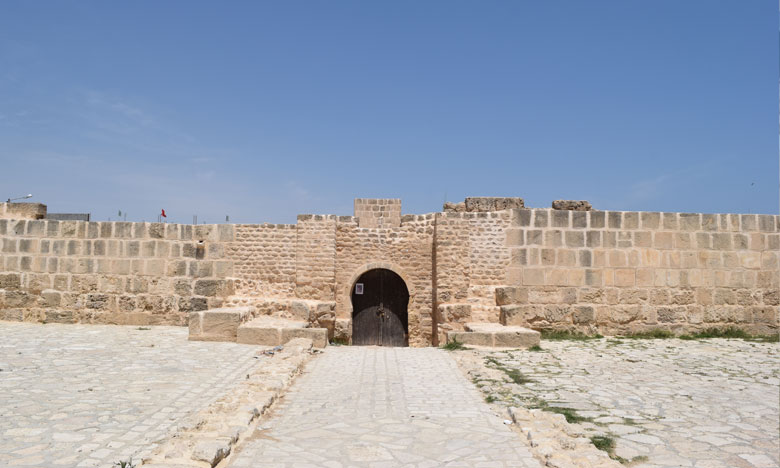
It is one of the most beautiful coastal lagoons on the sea. It was built in the Arab era by order of Abu Abu Ibrahim Ahmad, 245 AH and 859 AD, and was supervised by the servant of Abi Ibrahim Ahmed Fatata.
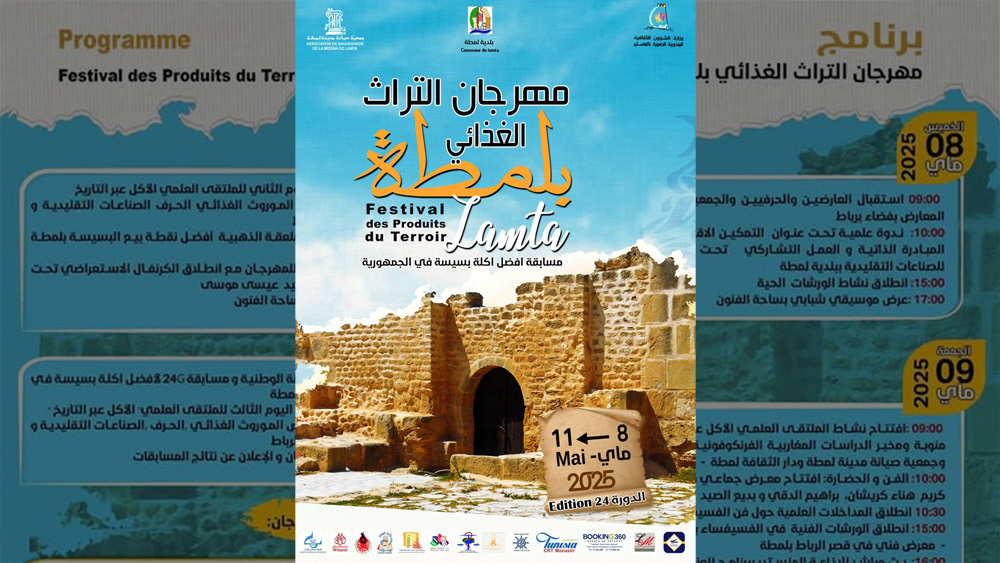
Rabat today is the headquarters of the maintenance society of the city of Mata and also includes a cultural and archaeological library and use the space to establish the activities of the Festival of Lptis.
The Whole Mosque
It was built in the ninth century AD (third century AH) and was built with the same marble, which was renovated by the Mosque of Ibn Abi Nafie Kairouan and used in the construction of many artifacts such as crowns and marble columns.
Educational and cultural institutions
El Habib Bourguiba Primary School
The school was opened on 6 January 1930. The number of pupils was 66 when two children were divided into two classes.
It should be noted that the first student to receive the primary certificate in 1934 and the first girl entered the school was in 1946.
- Details
It seems that it was difficult to establish a clear definition of the tribes
- Details
The Phoenician era
Lamta represents a historical settlement area which was taken by the Phoenician as a station in the southern part of the mideterrainien which is known as the Phoenician ladders which is what characterized Lamta "Leptis" and the protection was provided to their boats and survival ressources transferred the area into a landmark
Carthaginian era
In the Carthaginian era, the "Létis" was known for its many events and developments
The father of Hannibal, the father of Hannibal, extinguished the army's wage revolution, but a section of the rebellious army managed to escape under the leadership of the barbaric leader "Maator", who was in the city of Lptis (now known as Mata), which was famous at that time for its flourishing and shielding its walls to hide behind its protective walls. Understand the plan and join it quickly and prevent him from entering to Beatis (for the present) and defeated him in front of its doors in 237 BC.
In the year 203 BC, Belbeis was removed from the battles of Italy and from Létis (now to Mata) and from his side an army that reinforced his army from Italy and attacked Siboun and Masinisa in the city. 'Zama' near Kef where he was defeated.
The Roman era
At the time of the Second Punic War, the city of Lépice (Carthage) realized that Carthage had no choice but to abandon it and joined the ranks of Rome. Its last vassals made it, after the destruction of Carthage in 146 BC, one of the seven free cities in the Roman state of Africa.
In 46 BC, during the Roman Civil War, Beatrice (now Mata) "Julius Caesar" against the Republicans was defeated before the Battle of Tapsos, which ended with the victory of the Tsarist section.
The city of Leptis (Mata currently) has its own gold coins bearing its name inscribed with Greek characters. The monuments also showed the cultural splendor that the city acquired through the construction of theaters, playgrounds, luxury homes and other signs of urban prosperity.
The Byzantine era
In the sixth and seventh centuries AD, when the Tunisian country became Byzantium, the prosperity of Bethes (now Mata) increased to the extent that it became with the city of Gafsa the center of residence of the supreme commander of the Byzantine armies in the country. In 533, the Byzantine forces under the command of General "Belizar" (Now Mata) and became the seat of the military governor of the state of Pizzasina.
The Islamic Covenant
The importance of the strategy center was not limited to the Arab conquerors. The palace of Rabat was built in the Arab era, which was ordered by the construction of Abu Ibrahim Ahmed, in 245 AH and 859 AD, and the supervisor of its construction was the servant of Abu Ibrahim Ahmed, his daughter.
A link to the tribe of a group of scholars and worshipers, including Abu Harun Andalusian, who lived there for a long time.
Note The city was mentioned under the name of Mata in the 12th and 13th centuries by the Idrisi and Altigani.


Municipality of Lamta
The city of Lamta is located in the eastern part of the country of Tunisia on the shores of the Mediterranean Sea and extends along the two avenues of the 92nd road between Sousse and Monastir on the one hand and Mahdia on the other
It is bordered to the south by the city of Sayada and west by Bouhjar and by Kasr Hlal and to the north by the city of Ksiba Mediouni, either eastward and bordered by the Mediterranean Sea.
Visitors
We have 47 guests and no members online